Let’s kill the tired narrative right now: SAP BASIS isn’t a dead-end job being eaten by cloud. What’s dead is the old version that meant restarting servers and praying backups ran. The SAP BASIS career roadmap in 2026 looks dramatically different from five years ago — and honestly, it’s never been more interesting.
I’ve watched colleagues panic over every S/4HANA migration announcement. But here’s what actually happened: the ones who leaned into the transformation are now earning more, doing more meaningful work, and sleeping better because they automated the stuff that used to wake them at 3 AM.
Table of Contents
How the BASIS Role Has Changed
Today’s BASIS professional is a hybrid: part infrastructure engineer, part cloud architect, part security analyst, part automation developer. We went from managing servers that SAP runs on to orchestrating the platforms SAP runs within.
- Physical servers to hyperscalers — AWS, Azure, and GCP knowledge isn’t optional anymore.
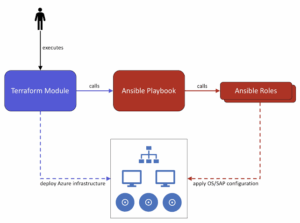
- Manual provisioning to IaC — Terraform and Ansible replace click-next-finish installs.
- Batch jobs to real-time monitoring — Cloud ALM and observability platforms redefine system health.
- Security afterthought to security-by-design — IAS/IPS and RFC hardening are core tasks now.
Stage 1: Master SAP HANA Administration
Everything in this SAP BASIS career roadmap builds on HANA. Whether you end up managing on-prem HANA, SAP HANA Cloud, or S/4HANA’s database layer, you need to understand how it actually works.
What recruiters want in 2026:
- HANA architecture and memory management — columnar storage, in-memory processing, and troubleshooting performance issues — see the official SAP HANA documentation for deep details
- Backup and recovery with savepoints and snapshots — knowing recovery options cold separates seniors from juniors
- Performance tuning and SQL plan cache — EXPLAIN PLAN, PlanViz, and the Statement Library are daily tools
- Tenant database administration in MDC — resource allocation across tenants in multi-tenant containers
- HANA replication and DR setup — system replication and clean failover during DR drills
Don’t just take courses. Spin up HANA Express, break it, fix it, break it again. That muscle memory is what gets you through real incidents.
Stage 2: Cloud and RISE with SAP
RISE with SAP is the default deployment model now. Companies are migrating existing landscapes at a pace we haven’t seen before. You don’t need to be a certified AWS architect, but you should understand VPC networking, IAM, storage tiers, and compute sizing well enough to collaborate with cloud teams.
Think of it this way: a BASIS admin who can speak both cloud and SAP fluently enough to translate between them is worth their weight in gold. BTP has matured significantly — if you haven’t touched Cloud Foundry, SAP HANA Cloud services, or the Integration Suite, now is the time. Cloud ALM is replacing Solution Manager; learn how to use it for incident management and change control.
As I covered in moving from SAP BASIS to Cloud Architect, this transition is the single biggest opportunity in SAP infrastructure right now.
Stage 3: Automation and Scripting
This stage separates a senior consultant from someone stuck executing other people’s runbooks. Automation isn’t a nice-to-have — it’s the skill everyone notices when you don’t have it.
- Python — SAP host agent automation, API integration, BTP orchestration, custom monitoring. You don’t need to be a developer, but you should be dangerous enough to write scripts that save hours.
- Terraform/IaC — Provisioning SAP landscapes on cloud infrastructure with code instead of wizard steps.
- Ansible — Patching 20 application servers manually in 2026 is embarrassing. Ansible makes it a 10-minute playbook.
- Shell/Bash — Still the backbone of daily BASIS operations. Know XML-startup parameters and kernel troubleshooting.
I once wrote a Python script that replaced four hours of Sunday manual health checks with a 90-second automated run. That one script justified an entire consulting engagement. The 4-tier roadmap for cloud platform administration walks through how automation compounds over time.
Stage 4: Security and Compliance
SAP security is massive, and most BASIS admins only scratch the surface. Going deep here makes you indispensable:
- SAP IAS/IPS — SAML 2.0, OAuth, and Azure AD/Entra ID integration for user lifecycle management
- RFC/Communication security — SNC, Web Service security, secure Gateway communication. Unencrypted RFCs are audit red flags.
- Audit compliance — Read Access Logging, User Audit Logs, and AIS. Being the person who knows these without Googling earns serious credibility.
- SNOTE and security patches — Understanding the impact of a note before applying it shows professional maturity.
Certifications Worth Getting
Certifications don’t replace experience, but HR filters love them. Tier 1: SAP HANA 2.0 Technology Associate and S/4HANA Conversion Specialist. Tier 2: SAP BTP Extension Developer and AWS/Azure practitioner certs. Tier 3 (specialize based on path): SAP Embrace Migration Cockpit or ITIL Foundation.
Salary Expectations by Region
| Region | Junior (0-3 yrs) | Senior (5-8 yrs) | Lead (10+ yrs) |
|---|---|---|---|
| United States | $85K-$110K | $120K-$155K | $155K-$200K+ |
| Western Europe | EUR 55K-75K | EUR 85K-110K | EUR 115K-150K |
| India | INR 6L-12L | INR 15L-28L | INR 30L-50L |
| Middle East | $55K-$80K | $90K-$130K | $135K-$180K |
Cloud skills add a 15-25% premium. A BASIS consultant who scripts in Python, deploys with Terraform, and navigates BTP commands significantly higher rates than someone who only knows SAPGUI. The demand for this profile has never been higher.
Your 90-Day Action Plan
Days 1-30: Install HANA Express. Complete the HANA administration learning journey. Read three RISE migration case studies. Days 31-60: Sign up for a free BTP trial. Deploy an app on Cloud Foundry. Complete one cloud practitioner cert. Days 61-90: Build a Terraform template for SAP infrastructure. Write five Python scripts. Post about your learning on LinkedIn — it works.
Conclusion: Your Next Move
This SAP BASIS career roadmap boils down to one principle: evolve or plateau. You don’t need to become a cloud architect overnight — but you do need to start. Pick one skill from this guide you don’t have yet and invest two hours a week. In six months, you’ll be in a completely different position.
What’s your next move? Drop a comment with your biggest career challenge right now. For more career-focused SAP content, check out top 30 SAP BASIS interview questions for 2026 and RISE with SAP for BASIS consultants.